
Most houseplants don’t die from neglect. They die from watering that’s slightly, chronically wrong — a little too much, a little too often, or based on a schedule that has nothing to do with what’s actually happening at the roots. The soil surface can look bone dry while the root ball underneath is still soaked from a watering three days ago, and there’s no way to know that just by looking or even by pressing a finger an inch into the pot. This is exactly the problem a moisture meter for indoor plants solves: it gives you a direct reading of what’s happening below the surface, instead of a guess based on how the top of the soil feels.
If you’ve ever second-guessed yourself standing over a peace lily with a watering can, wondering if yesterday’s drooping was thirst or the opposite, you already understand the core issue. Soil moisture isn’t something the eye is good at judging, especially in the compact, decorative pots most of us use indoors. A moisture meter closes that gap. It won’t replace your judgment about a plant’s overall health, but it removes the single biggest variable that leads to overwatering and root rot — not knowing what the soil actually looks like a few inches down.
This guide walks through how these tools work, which ones are worth buying, how to use one correctly, and which plants benefit most from consistent moisture monitoring.
Table of Contents
What Is a Moisture Meter for Indoor Plants?
A moisture meter for indoor plants is a handheld tool with a probe that you insert into potting soil to get a direct reading of how much moisture is present near the roots. This means you don’t have to guess when to water based on a strict schedule or just how the top of the soil looks.
Most consumer moisture meters work on a simple principle: they measure how easily electricity moves through the soil. Water conducts electricity better than dry soil does, so when the metal probe is inserted into the growing medium, the meter reads the resulting electrical resistance (or, if you use a fancier capacitive model, it measures the soil’s electrical charge instead) and translates that data into a simple moisture score you can easily understand.
The Moisture Scale
Almost every consumer meter displays results on some version of a simple scale:
- 1–3 (Dry): Time to water, or close to it, depending on the plant
- 4–6 (Moist): Generally the target zone for most houseplants
- 7–10 (Wet): Recently watered or still holding excess water — hold off
Some analog dials use color bands (red/green/blue) instead of numbers, but the underlying logic is the same.
Probe Technology
- Resistive probes (most common, budget-friendly): Two metal prongs measure electrical resistance between them. Simple, reliable for a quick check, but can corrode over years of use and are sensitive to mineral buildup in the soil.
- Capacitive probes (more common in digital and smart meters): Measure the soil’s dielectric constant rather than passing current directly through the metal contacts. These tend to hold up better over time and are less affected by fertilizer salts.
Analog vs. Digital vs. Multi-Function
- Analog meters use a mechanical dial and need no batteries — insert the probe, read the needle.
- Digital meters use an LCD screen that displays a specific number or percentage, and they run on a small battery.
- Multi-function meters add light and/or pH sensors alongside moisture, useful if you want one tool that gives a broader read on growing conditions rather than moisture alone.
None of these is universally “better” — the right type depends on how precisely you want your readings and how much fuss you’re willing to deal with.
Why Indoor Plants Need a Moisture Meter
Quick answer: Indoor plants need a moisture meter because container soil dries unevenly, overwatering is one of the most common causes of houseplant death, and a direct root-zone reading is far more reliable than judging by soil color, weight, or the finger test.
Root Rot Prevention
Root rot develops when roots sit in saturated soil long enough that they’re deprived of oxygen and become vulnerable to fungal pathogens. It’s a slow, often invisible process — by the time leaves start yellowing or the plant looks “off,” the roots may already be compromised. A moisture meter lets you catch a saturated root zone before it becomes a rot problem, simply by warning you off watering when the reading is still high.
Overwatering and Underwatering, Solved the Same Way
Overwatering and underwatering produce nearly identical symptoms above the soil line — drooping, yellowing, leaf drop. That overlap is exactly why so many plant owners respond to a droopy plant by watering it, even when the actual problem is the opposite. A moisture reading removes the ambiguity immediately: if the reading is high, the plant isn’t thirsty, whatever the leaves look like.
Healthier Root Systems and Better Growth
Consistent moisture within a plant’s preferred range — rather than swings between soggy and bone-dry — supports steadier root development. Roots that aren’t stressed by extremes can focus energy on growth instead of recovery.
Reduced Plant Stress and More Watering Confidence
There’s also a less measurable benefit: confidence. New plant owners in particular tend to either overcompensate (watering constantly out of anxiety) or underwater (afraid of drowning the plant after one bad experience). A direct reading takes the emotion out of the decision.
Benefits of Using a Moisture Meter for Indoor Plants
- More accurate watering — you’re responding to actual soil conditions, not a calendar
- Less guesswork — no more relying on lifting the pot to “feel” the weight
- Better plant health — fewer swings between overwatering and drought stress
- Easier maintenance across many plants — a quick check per pot takes seconds
- Saves time — no need to dig fingers into soil or wait to see how a plant reacts
- Ideal for beginners — it eliminates the trial-and-error that usually leads to accidentally killing your first few houseplants
- Useful for plant collections with mixed needs — a snake plant and a calathea have very different watering needs, and a meter helps you keep track of both without confusion
Best Moisture Meter for Indoor Plants
The following options were chosen to cover a range of budgets, styles, and use cases — from simple no-frills analog dials to app-connected smart sensors. None of these are perfect, and the “best” one depends heavily on how many plants you’re managing and how much precision you actually want.
Below are 10 options worth considering, picked to cover different budgets and use cases. For an even broader roundup across plant types beyond just indoor use, see our Best Soil Moisture Meter guide.
1. XLUX Soil Moisture Meter
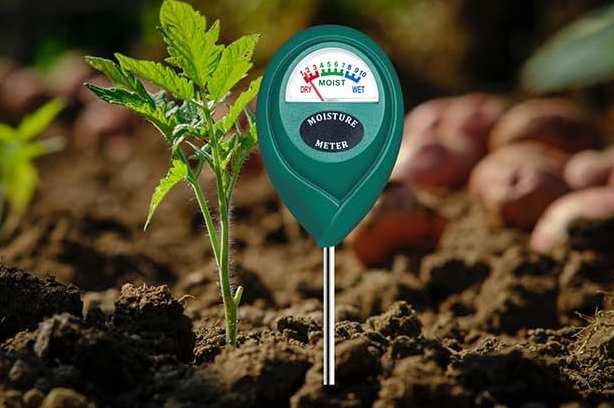
A straightforward analog meter with a 10-point dial scale and roughly 7.9-inch probe. Requires no batteries or calibration — insert and read.
- Best for: General indoor use across a mixed plant collection.
- Key Features: Analog dial, no power source needed, works in both soil and coco coir.
- Advantages: Instant readings, no battery replacement ever, simple enough for daily use.
- Limitations: Resistive probe can be less accurate in very compact or mineral-heavy soil over time; no numeric precision beyond the dial’s 10 points.
- Ideal Users: Beginners who want a reliable, no-maintenance tool without learning a display.
2. Gouevn Soil Moisture Meter
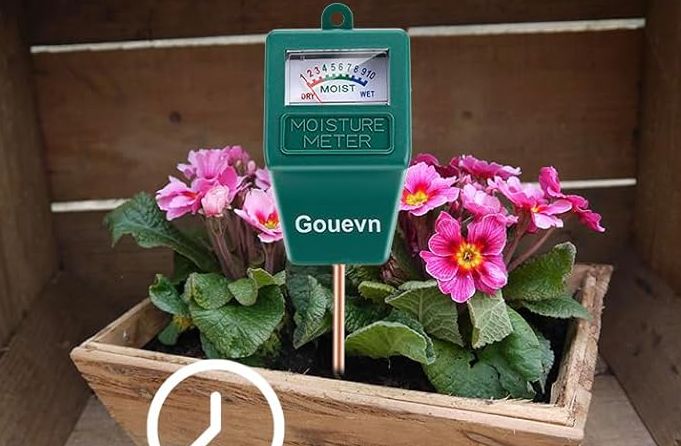
A budget analog meter with a large, easy-to-read dial and a printed watering guide covering a wide range of common houseplants.
- Best for: Shoppers who want dependable basic readings without paying for extra features.
- Key Features: Color-coded dial, roughly 7.7-inch probe, plant-specific watering reference included in packaging.
- Advantages: Low cost, sensitive probe for its price point, genuinely helpful included reference guide.
- Limitations: No numeric display; probe length is on the shorter side for large floor planters.
- Ideal Users: New plant owners building their first small collection.
3. Luster Leaf Rapitest 1835
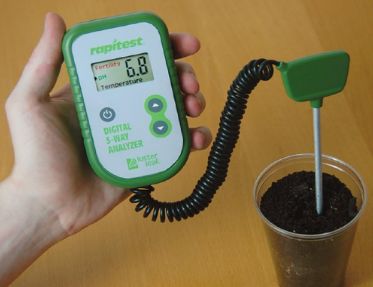
An analog meter with a longer, cable-connected probe (around 11.5 inches) and a color-banded dial calibrated with watering recommendations for a large number of specific houseplant species.
- Best for: People managing several different plant species with very different watering needs.
- Key Features: Long probe reach, species-specific watering chart, cable-and-reader design that lets you check multiple pots quickly.
- Advantages: The species chart genuinely cuts down on guesswork if you’re not sure what “moist” means for a specific plant.
- Limitations: The cable-and-reader setup is bulkier than a one-piece design and slightly more prone to wear at the connection point.
- Ideal Users: Collectors juggling a wide variety of species with different watering preferences.
4. Dr. Meter S10
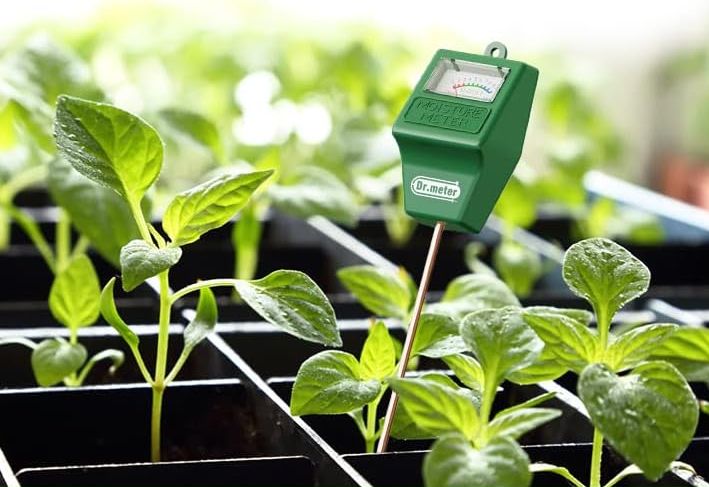
An analog meter that displays a simple numeric 1–10 reading instead of color bands, paired with a longer probe of roughly 20 cm (about 8 inches).
- Best for: Plant owners who find a number easier to track and log than a color zone.
- Key Features: Numeric scale, no batteries, longer-than-average probe for its price tier.
- Advantages: Numbers are easy to record over time if you want to track trends per plant.
- Limitations: The numeric scale is proprietary to the brand, not a standardized soil-science measurement, and readings can shift somewhat across different soil types (peat-based mix vs. coir vs. bark).
- Ideal Users: Anyone who wants to keep a simple watering log across multiple plants.
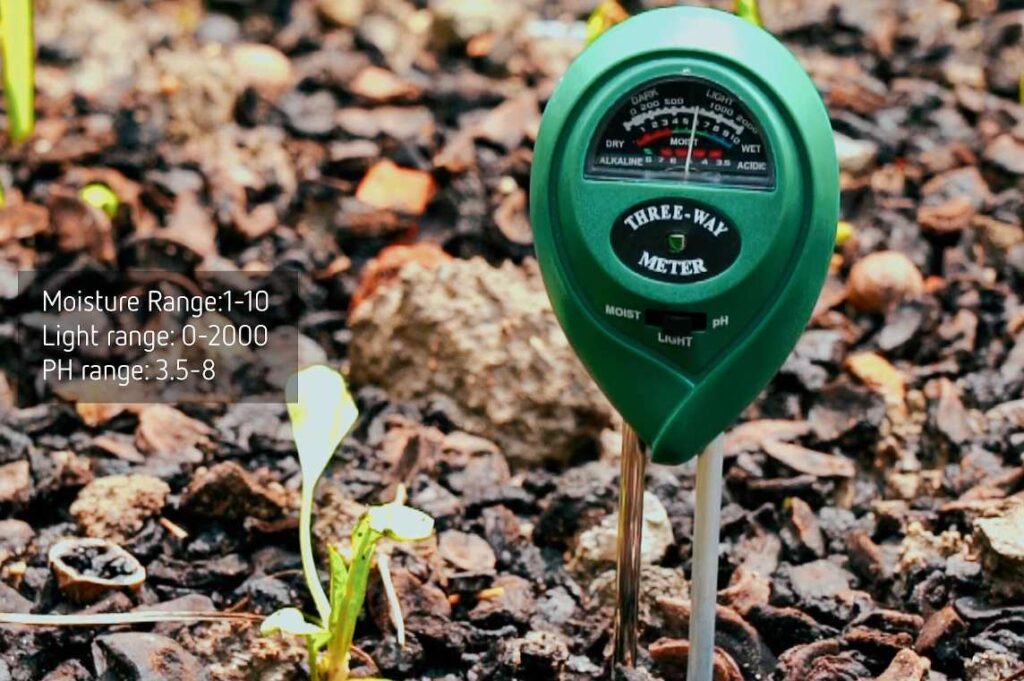
5. Sonkir MS02 3-in-1 Meter
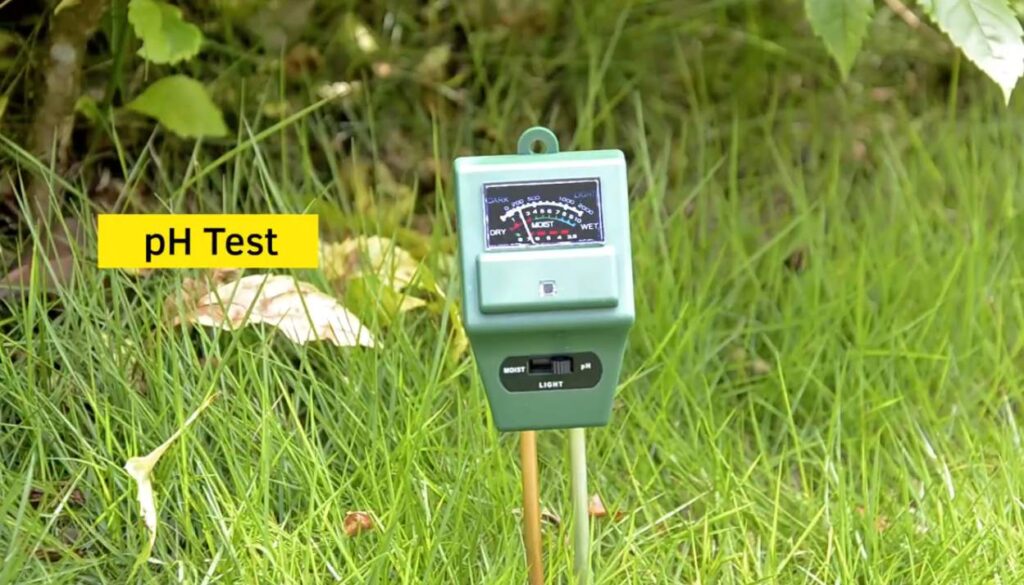
A multi-function analog meter that reads moisture, light level, and soil pH from the same probe.
- Best for: Plant owners who want a broader read on growing conditions, not just moisture.
- Key Features: Three-in-one dial, no batteries required, compact design.
- Advantages: Useful if a plant is struggling and you’re not sure whether the cause is water, light, or soil chemistry.
- Limitations: Because it’s doing three jobs at once, none of the three readings is as precise as a single-function meter; pH readings in particular should be treated as a rough indicator rather than lab-accurate.
- Ideal Users: Plant owners diagnosing a struggling plant, not just checking routine watering.
6. Kensizer 3-in-1 Soil Tester
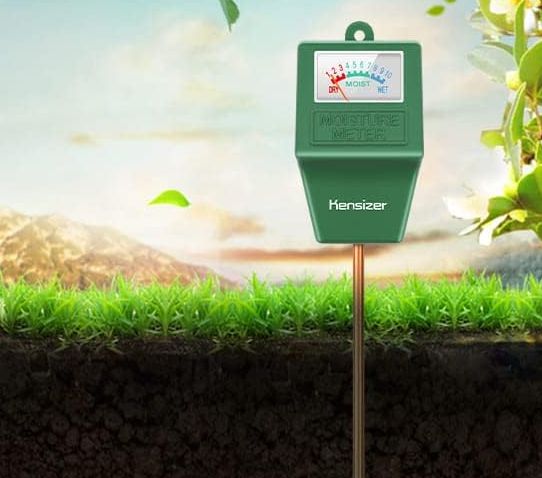
Similar in concept to the Sonkir — moisture, light, and pH from one analog probe — at a slightly different price point and dial design.
- Best for: Budget-conscious buyers who still want multi-function readings.
- Key Features: Analog dial, no battery, lightweight build.
- Advantages: Inexpensive way to get more than a single moisture reading.
- Limitations: Build quality on the probe tends to be lighter-duty; not ideal for frequent use across a large collection.
- Ideal Users: Casual plant owners with a handful of pots who want basic extra context beyond moisture alone.
7. VIVOSUN Digital Soil Moisture Meter
A digital meter with an LCD screen showing a percentage-based moisture reading rather than a dial position.
- Best for: Plant owners who want more granular, numeric feedback than an analog dial provides.
- Key Features: Digital percentage display, single-probe design, requires a small button battery.
- Advantages: Percentage readings are easier to compare precisely between check-ins than a dial position.
- Limitations: Battery will eventually need replacing; digital displays can be harder to read in low indoor light without a backlight.
- Ideal Users: Detail-oriented plant owners who like tracking precise numbers over time.
8. REOTEMP Garden and Compost Moisture Meter
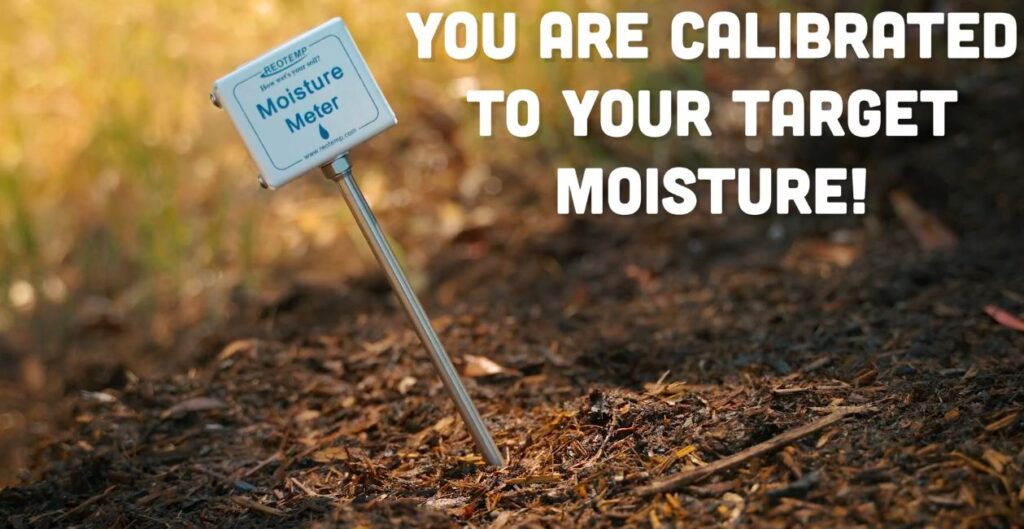
Originally built for compost and garden bed monitoring, this analog meter has a substantially longer probe (20+ inches) than typical houseplant meters.
- Best for: Large floor planters, deep containers, and big pots where a short probe only reads the top few inches.
- Key Features: Extra-long probe, rugged analog dial, no batteries.
- Advantages: Actually reaches the root zone in large pots where shorter meters only sample the surface layer.
- Limitations: Overkill and unwieldy for small pots or propagation containers.
- Ideal Users: Owners of large specimen plants like floor-standing fiddle leaf figs or mature rubber plants in big pots.
9. Sustee Aquameter
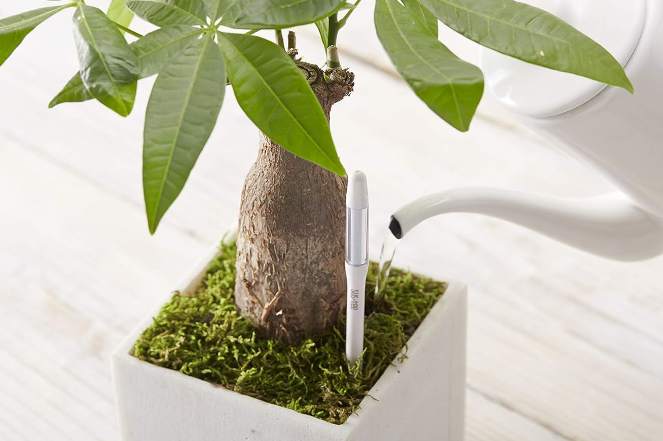
A different approach entirely — a plastic stick with a wick-based indicator window that changes color and stays inserted in the pot continuously, rather than being pulled out after each check.
- Best for: Low-effort, at-a-glance monitoring on small to medium pots.
- Key Features: No probe insertion required for each check, color-changing window visible at a glance, no batteries.
- Advantages: Genuinely minimal effort — you just glance at the plant instead of fetching a tool.
- Limitations: Less precise than a probe-based reading, and it’s a single-function tool with no numeric output; sizing (there are different lengths) matters for pot depth.
- Ideal Users: People who want a “set it and glance at it” solution rather than actively testing plants.
10. Ecowitt WH0291 Soil Moisture Sensor (with Gateway)
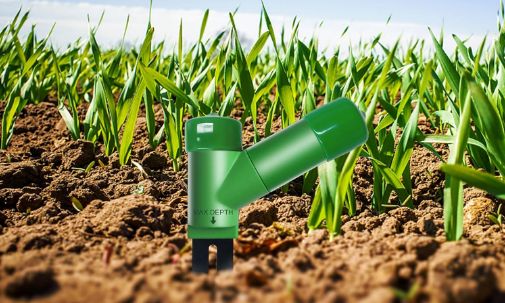
A capacitive, app-connected sensor designed to feed data into an Ecowitt smart home gateway, giving you moisture readings on your phone rather than a physical dial.
- Best for: Tech-inclined plant owners who already use, or are willing to invest in, connected home monitoring.
- Key Features: Wireless data logging, phone app dashboard, customizable low-moisture alerts.
- Advantages: Passive monitoring without physically checking each plant; alert thresholds are genuinely useful for moisture-sensitive plants.
- Limitations: Requires a separate Ecowitt gateway hub to function at all — it’s not standalone, and total setup cost is meaningfully higher than any analog option on this list if you’re starting from scratch.
- Ideal Users: Plant owners already invested in a smart home ecosystem, or anyone monitoring a moisture-sensitive plant (like a calathea) while traveling.
Comparison Table
| Product | Meter Type | Display | Probe Length | Battery Required | Best For | Overall Rating |
|---|---|---|---|---|---|---|
| XLUX Soil Moisture Meter | Analog | Dial | ~7.9 in | No | General indoor use | 4.5/5 |
| Gouevn Soil Moisture Meter | Analog | Dial | ~7.7 in | No | Budget beginners | 4/5 |
| Luster Leaf Rapitest 1835 | Analog | Color-banded dial | ~11.5 in | No | Mixed plant collections | 4/5 |
| Dr. Meter S10 | Analog | Numeric dial | ~8 in | No | Tracking readings over time | 4/5 |
| Sonkir MS02 3-in-1 | Analog | 3-in-1 dial | ~8 in | No | Diagnosing struggling plants | 3.5/5 |
| Kensizer 3-in-1 | Analog | 3-in-1 dial | ~8 in | No | Budget multi-function | 3.5/5 |
| VIVOSUN Digital Meter | Digital | LCD percentage | ~8 in | Yes | Precise numeric tracking | 4/5 |
| REOTEMP Garden/Compost Meter | Analog | Dial | 20+ in | No | Large pots, floor planters | 4.5/5 |
| Sustee Aquameter | Indicator stick | Color window | Fixed (size-dependent) | No | Low-effort monitoring | 4/5 |
| Ecowitt WH0291 (+ gateway) | Smart/digital | App dashboard | Sensor probe | Yes | Connected home monitoring | 3.5/5 |
How to Choose the Best Moisture Meter for Indoor Plants
Prioritize probe length matched to your pot sizes, a display you can read comfortably, and build quality over extra features — a simple, accurate meter beats a feature-packed one you stop trusting after a year.
- Accuracy: No consumer meter matches lab-grade soil sensors, but resistive analog meters and capacitive digital meters are both accurate enough for practical watering decisions. Consistency matters more than absolute precision — you’re looking for trends, not scientific data.
- Build Quality: Cheap probes can bend or the tip can loosen from repeated insertion. If you’re checking multiple plants weekly, spend slightly more for a probe that will hold up.
- Probe Length: Match the probe to your pots. A 7–8 inch probe is fine for most standard houseplant pots, but large floor planters need something closer to 12–20 inches to actually reach the root zone instead of just the top layer of soil.
- Display Readability: Analog dials are easy to read at a glance but offer less precision. Digital displays give you a specific number but can be hard to read without good lighting.
- Ease of Use: If a tool has a learning curve, you’re less likely to use it consistently. Simple insert-and-read designs tend to get used more often than multi-step digital tools.
- Durability: Resistive metal probes can corrode over years, especially in soil with heavy fertilizer salt buildup. Rinsing and drying the probe after each use extends its life considerably.
- Price: Basic analog meters are inexpensive and cover the vast majority of home use cases well. Multi-function and smart options cost more and are worth it only if you actually need the extra data.
- Battery Requirements: Analog meters never need batteries, which matters if you tend to forget maintenance tasks. Digital and smart meters need occasional battery changes or charging.
How to Use a Moisture Meter for Indoor Plants
Insert the probe two-thirds of the way into the pot, near the root zone rather than right against the pot wall, wait a few seconds for the reading to settle, and use that number — not the surface soil — to decide whether to water.
- Water first, then wait — don’t test right after watering. A reading taken immediately after watering will show “wet” regardless of the plant’s actual baseline needs. Test before you water, not after.
- Insert the probe at an angle, roughly two-thirds of the pot’s depth. Testing only the top inch or two gives you surface information, not root-zone information — and the two can be very different.
- Avoid inserting directly against the pot wall or drainage holes. Readings near the edges of the pot are less representative than readings closer to the center, where most of the root mass typically sits.
- Give the meter a few seconds to settle before reading the dial or display, especially with resistive analog meters.
- Test in more than one spot for larger pots. A single reading in a big planter can miss dry pockets or overly wet zones, especially if the plant has an uneven root distribution.
- Compare the reading to the plant’s specific preference, not a universal number. A snake plant’s “time to water” reading will be very different from a calathea’s — know your plant’s baseline before assuming a number means the same thing across your whole collection.
- Wipe the probe clean after each use. If you leave dirt on the probe, it can mess up your next readings and cause the metal to rust over time.
- Retest instead of relying on memory. Soil dries at different rates depending on season, humidity, and pot material — don’t assume last week’s reading still applies.
For plant-specific insertion depth and timing, see our full guide on how to use a moisture meter for plants.
Digital vs Analog Moisture Meter
| Factor | Analog Meter | Digital Meter |
|---|---|---|
| Accuracy | Good for practical use; less granular | Slightly more granular, percentage-based |
| Ease of Use | Insert and read instantly | Requires reading a screen, sometimes a button press |
| Maintenance | Rinse probe, otherwise minimal | Same probe care, plus occasional battery checks |
| Battery | Not required | Required (usually a small button cell) |
| Durability | Very durable, few moving parts | Depends on display and battery housing quality |
| Cost | Generally lower | Generally moderate to higher |
| Best Users | Beginners, low-maintenance preference | Owners who want precise, trackable numbers |
One isn’t necessarily better than the other. Analog models are great because they are simple and last a long time, whereas digital versions are perfect if you want exact numbers to track over time.
Common Mistakes When Using a Moisture Meter
- Leaving the probe in the soil long-term. Most consumer meters are designed for spot checks, not permanent installation (the Sustee-style indicator sticks are the exception). Leaving a standard probe in soil continuously accelerates corrosion.
- Measuring immediately after watering. This tells you the soil is wet, which you already knew — it doesn’t help you plan your next watering.
- Testing only one location in the pot. A single spot check, especially near the pot’s edge, can give a misleading reading compared to the root zone near the center.
- Ignoring plant-specific watering needs. A reading of “4” means something different for a snake plant than for a peace lily. Learn your individual plants’ preferences rather than applying one universal rule.
- Using a dirty probe. Soil buildup on the metal contacts can throw off resistive readings over time.
- Incorrect insertion depth. Only pushing the probe an inch or two into the soil samples the layer that dries fastest and is least representative of what the roots are actually experiencing.
Best Indoor Plants That Benefit from a Moisture Meter
- Fiddle Leaf Fig: Notoriously sensitive to both over- and underwatering, with leaf drop as the common symptom for either extreme — a meter helps you tell which one you’re dealing with.
- Monstera: Prefers to dry out somewhat between waterings; a meter prevents the common mistake of watering too frequently out of enthusiasm.
- Snake Plant: Extremely prone to root rot from overwatering; a meter helps enforce the long dry-out periods this plant actually needs.
- Peace Lily: Dramatic wilting when thirsty leads many owners to overcorrect with water — a reading confirms whether the soil is actually dry before adding more.
- Pothos: Forgiving overall, but chronic overwatering is still the most common way to lose one; a quick check prevents that pattern from developing.
- ZZ Plant: Stores water in rhizomes and is highly susceptible to rot if watered too often — a meter is arguably more useful here than for almost any other common houseplant.
- Spider Plant: Tolerant of some neglect, but consistent moisture monitoring helps avoid the brown tip stress that comes from irregular watering.
- Rubber Plant: Large leaves and a substantial root system in a big pot make surface-only checks unreliable — a longer probe is genuinely useful here.
- Philodendron: Prefers evenly moist (not soggy) soil, which is easier to maintain with a direct reading than by feel alone.
- Calathea: Sensitive to both drought stress and waterlogging, with narrow tolerances on both ends — a moisture meter helps hit that narrower target consistently.
- Chinese Evergreen: Generally low-maintenance, but a meter helps prevent the slow overwatering that’s the most common way this otherwise hardy plant declines.
Moisture Meter Care and Maintenance
- Clean after every use. Wipe the probe with a soft, dry cloth to remove soil and residue before storing.
- Dry thoroughly before storage. Moisture left on a metal probe accelerates corrosion, especially on resistive meters.
- Store away from direct sun and humidity. Extreme conditions can affect dial calibration over time on analog meters and shorten battery life on digital ones.
- Never try to push the metal tip into hard, packed dirt or stones. This is the most common way probe tips bend or snap.
- Replace batteries proactively on digital meters. A low battery can produce inconsistent digital readings before the device fully dies.
- Recalibrate expectations periodically. Even without a hardware fault, resistive probes can drift slightly with age — if readings start to feel inconsistent with what you observe in the plant, treat the numbers as relative trends rather than absolute values.
Frequently Asked Questions
1. Are moisture meters accurate?
Consumer moisture meters aren’t lab-grade instruments, but they’re accurate enough for practical watering decisions. Resistive analog meters and capacitive digital meters both give reliable relative readings — dry, moist, or wet — even if the exact number isn’t scientifically precise. Consistency in how you use them matters more than absolute accuracy.
2. Do indoor plants really need one?
They’re not strictly required, but a moisture meter for indoor plants removes one of the biggest sources of watering error: not knowing what’s happening below the soil surface. For beginners or anyone managing several plants with different needs, it meaningfully reduces overwatering and underwatering mistakes.
3. Can it damage roots?
Inserting a probe carefully rarely damages roots in an established plant with normal root density. Be gentler with small pots, freshly repotted plants, or seedlings, where root systems are less developed and more easily disturbed.
4. How often should I check soil?
Most houseplants only need a check every few days to once a week, depending on pot size, season, and plant type. Fast-drying plants in small pots or bright light may need more frequent checks; slow-drying plants in larger pots need less.
5. Can one meter be used for every plant?
Yes, physically — but the reading that means “water now” for one plant may mean “too wet” for another. You’ll need to learn each plant’s preferred range rather than applying one universal number across your whole collection.
6. Should I buy digital or analog?
Analog meters are simpler, need no batteries, and are very durable. Digital meters offer more precise, trackable numeric readings but require occasional battery changes. Either works well for home use — the choice comes down to personal preference.
7. Can moisture meters test fertilizer?
Standard moisture meters don’t measure fertilizer or nutrient levels. Multi-function meters that include a pH reading give a very rough indicator of soil chemistry, but they aren’t a substitute for a dedicated soil nutrient test.
8. Can I use it outdoors?
Most indoor-focused moisture meters can technically be used outdoors, but outdoor soil conditions (rocks, roots, more extreme moisture swings) put more wear on the probe. If you garden both indoors and outdoors, a more rugged meter built for both is a better long-term choice.
9. Why are readings inconsistent?
Inconsistent readings usually come from testing different spots in the pot, a dirty probe, mineral buildup on the contacts, or checking too soon after watering. Testing in the same general spot and depth each time improves consistency.
10. How long do they last?
A well-maintained analog meter can last several years with basic care. Probe corrosion from moisture and mineral buildup is the most common failure point, which is why cleaning and drying the probe after each use matters.
11. Do moisture meters work in all soil types?
They work in most potting mixes, but readings can shift somewhat between mediums — a peat-based mix, coco coir, and bark-heavy orchid mix don’t conduct electricity identically. It’s worth establishing a rough baseline for each medium you use rather than assuming one number means the same thing everywhere.
12. Is a higher price always better?
Not necessarily. A basic analog meter covers the needs of most home plant owners very well. Higher-priced multi-function or smart options are worth it only if you specifically want the extra data (light, pH, or remote app monitoring) they provide.
13. Can I leave the probe in the soil permanently?
Most standard probe-style meters aren’t designed for permanent placement and will corrode faster if left in soil continuously. Indicator-stick style tools, like the Sustee Aquameter, are specifically designed to stay in the pot between checks.
14. Do moisture meters help prevent root rot?
Indirectly, yes. Root rot is typically caused by prolonged waterlogged soil. A moisture meter helps you avoid watering into already-saturated soil, which is the direct cause of the oxygen-deprived conditions that lead to rot.
15. What’s the difference between soil moisture and humidity?
Soil moisture refers to water content in the growing medium at root level, while humidity refers to moisture in the surrounding air. A moisture meter measures only the former — plants like calathea that are sensitive to air humidity need a separate humidity gauge for that concern.
Conclusion
Watering by instinct works for some plants some of the time, but it’s the single biggest reason houseplants struggle indoors — not because owners don’t care, but because soil moisture below the surface simply isn’t something you can judge accurately by eye. A moisture meter for indoor plants replaces that guesswork with a direct reading, which makes overwatering and underwatering both far easier to avoid. Whether you choose a simple analog dial or a more advanced digital or app-connected option, the real value isn’t the gadget itself; it’s the habit of checking before you water instead of watering on a schedule. Pair a reliable moisture meter for indoor plants with a bit of plant-specific knowledge, and watering stops being a guessing game.