
We have all been there. You bring home a gorgeous, vibrant new green companion, place it in the perfect spot, and promise to love it. But a few weeks later, the leaves look a little sad. You ask yourself: Is it thirsty, or am I drowning it? Mastering the art of hydration is the single biggest hurdle for any plant parent. If you are struggling, don’t panic—learning how to know when indoor plants need water is a science, not a guessing game, and you can absolutely master it.
At My Emerald Garden, we believe that indoor gardening should bring peace, not anxiety. The truth is, more houseplants die from overzealous watering than from neglect. Understanding the subtle language of your plants will transform you from an anxious plant owner into a confident, green-thumbed expert. Let’s dive into the exact signs indoor plants need water so you can keep your urban jungle thriving.
Table of Contents
Why Proper Watering Matters for Indoor Plants
When you grow plants outdoors, nature manages much of the ecosystem. Rain hydrates, wind dries the soil, and deep groundwater reserves give roots room to forage. Indoors, your plant is entirely dependent on you. It is trapped in a small container, making the margin for error much smaller.
Water does more than just quench a plant’s thirst; it carries essential nutrients from the soil up through the stems and leaves via a process called transpiration.
- Too little water: The plant’s cellular structure collapses, leading to wilting, stunted growth, and crisping leaves.
- Too much water: The spaces between soil particles fill with liquid instead of oxygen. Without oxygen, plant roots literally suffocate, drown, and begin to rot. Once root rot sets in, the plant can no longer absorb water at all, ironically causing it to look dehydrated.
Clear Signs Indoor Plants Need Water
Plants cannot speak, but they are incredibly expressive. If you look closely, they will tell you exactly when they need a drink. Here are the primary signs indoor plants need water:
1. The Weight of the Pot
This is one of the easiest, most reliable habits to develop. Pick up your potted plant right after a thorough watering; notice how heavy it feels. Now, pick it up when you suspect the soil is dry. If it feels incredibly light, almost as if the pot is empty, the moisture has evaporated and it is time to water.
2. Physical Changes in the Foliage
- Loss of Gloss: Healthy, hydrated leaves often have a vibrant, natural sheen. When a plant gets thirsty, its leaves turn dull, matte, or slightly pale.
- The “Pothos Droop”: Many popular houseplants, like Pothos, Peace Lilies, and Fittonias, are “drama queens.” They will noticeably sag or wilt when dry, only to perk completely back up a few hours after a deep watering.
- Crispy, Brown Leaf Tips: If the tips or edges of your leaves feel like paper or break away when touched, the plant is pulling moisture inward to protect its core.
3. Soil Compaction and Pulling Away
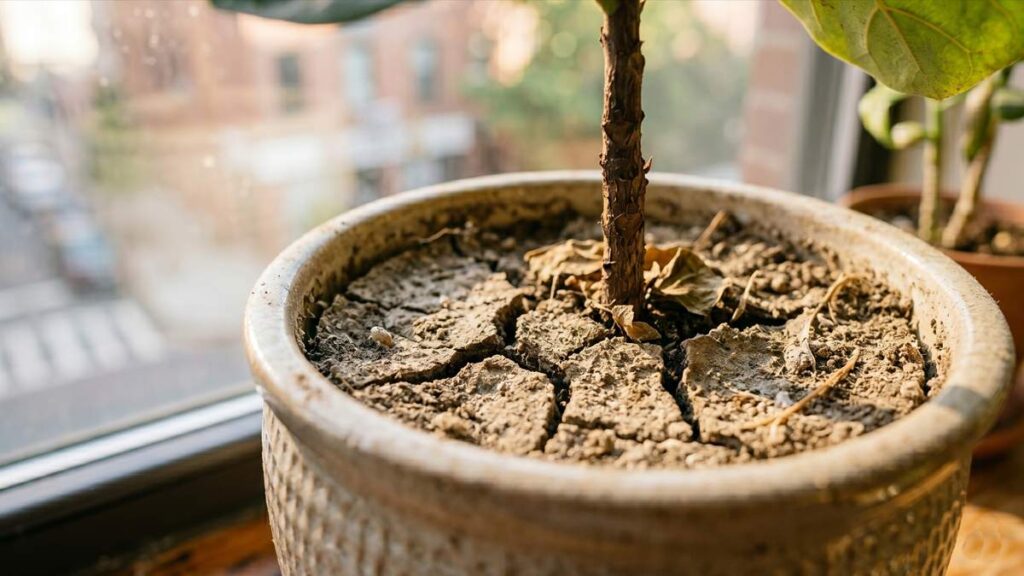
Examine the edges of your potting mix. When soil dries out completely, it shrinks. If you notice a visible gap between the soil cake and the inside wall of the pot, your plant is severely dry.
Overwatered vs. Underwatered Plants: The Key Differences
The trickiest part of plant care is that an overwatered plant and an underwatered plant can look strikingly similar at first glance. Both can wilt, and both can drop leaves. However, looking closely at the texture and color reveals the truth.
To help you diagnose your plant quickly, use this quick-reference table:
Signs of Overwatering vs. Underwatering
| Feature | Overwatered Plant Signs | Underwatered Plant Symptoms |
| Leaf Texture | Soft, limp, mushy, or blistered (edema) | Crisp, dry, papery, and brittle |
| Leaf Color | Pale yellowing, often starting at the bottom; black spots | Brown tips, entirely brown leaves, yellowing edges |
| Soil Condition | Consistently wet, muddy, or green with algae/mold | Bone dry, cracked, pulled away from the pot sides |
| Odor | Sour, musty, or rotten egg smell (indicates root rot) | Earthy, dusty, or no smell at all |
| Pests Present | Fungus gnats buzzing around the damp soil surface | Spider mites (they thrive in dry, dusty conditions) |
The Ultimate Low-Tech Test: The Finger Method
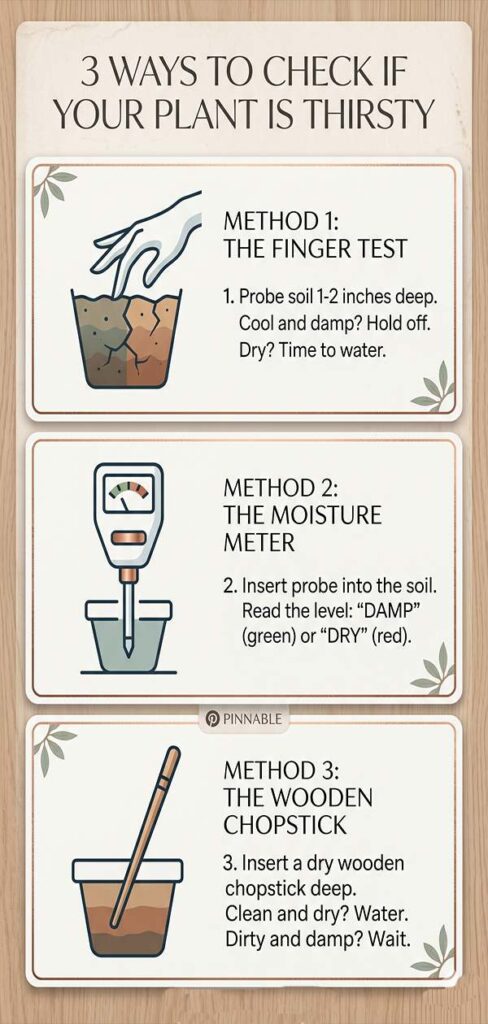
Before buying any fancy gadgets, your best tool is literally at your fingertips. The “finger test” is the gold standard for checking soil moisture.
How to Perform the Finger Test:
- Poke your index finger directly into the potting soil up to the second knuckle (about 1 to 2 inches deep).
- Analyze the sensation:
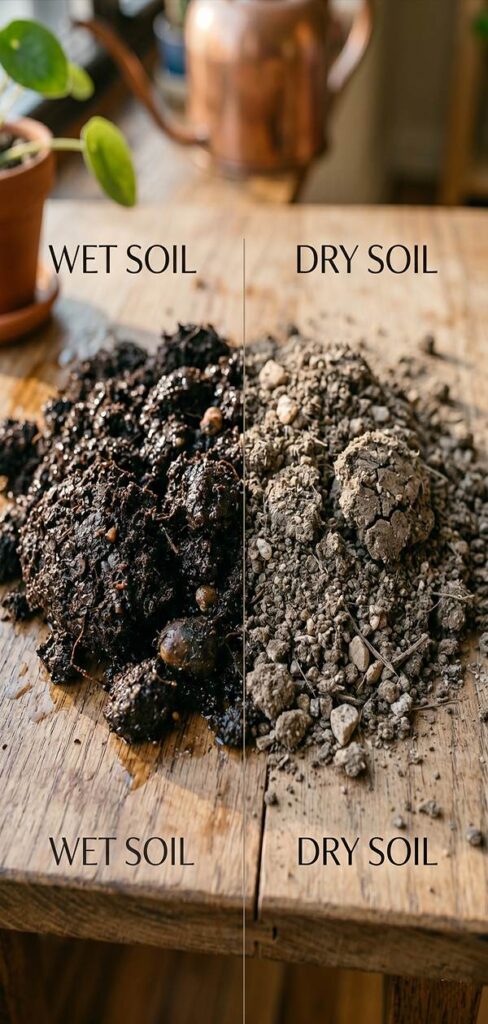
- If the soil feels cool, damp, and sticks to your skin, do not water.
- If it feels dry, loose, and powdery, it is time to water.
- For smaller pots, checking 1 inch down is plenty. For large floor plants (like a Fiddle Leaf Fig or Monstera), you may need to dig a bit deeper or use a wooden chopstick. Insert a clean wooden chopstick deep into the soil; if it comes out clean and dry like a baked cake, give it water. If it comes out with dark soil clinging to it, hold off.
Using Soil Moisture Meters Correctly
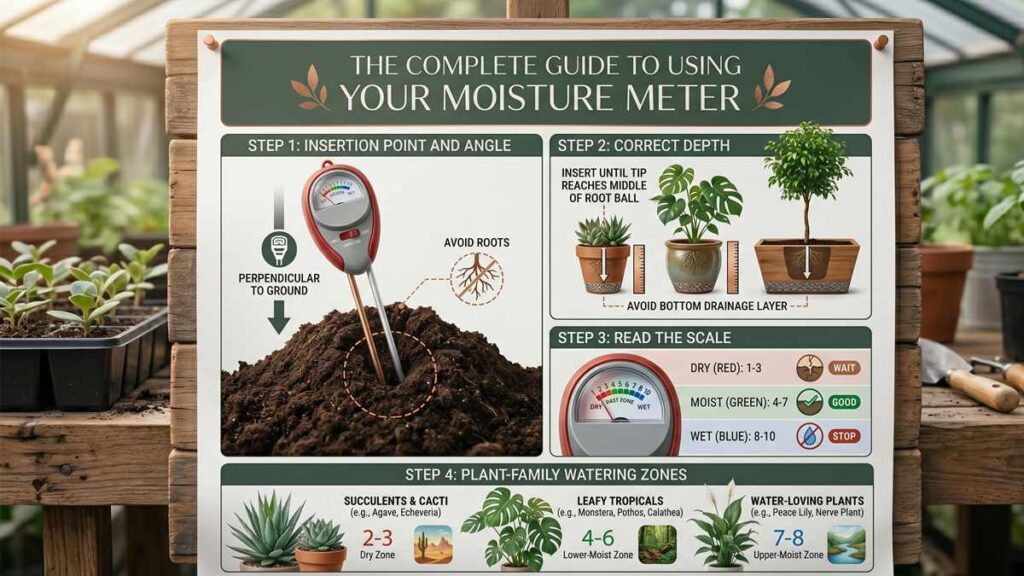
If you want to eliminate human error entirely, a soil moisture meter for plants is your best friend. These handy, battery-free devices measure the electrical conductivity of the soil, which changes depending on how much water is present.
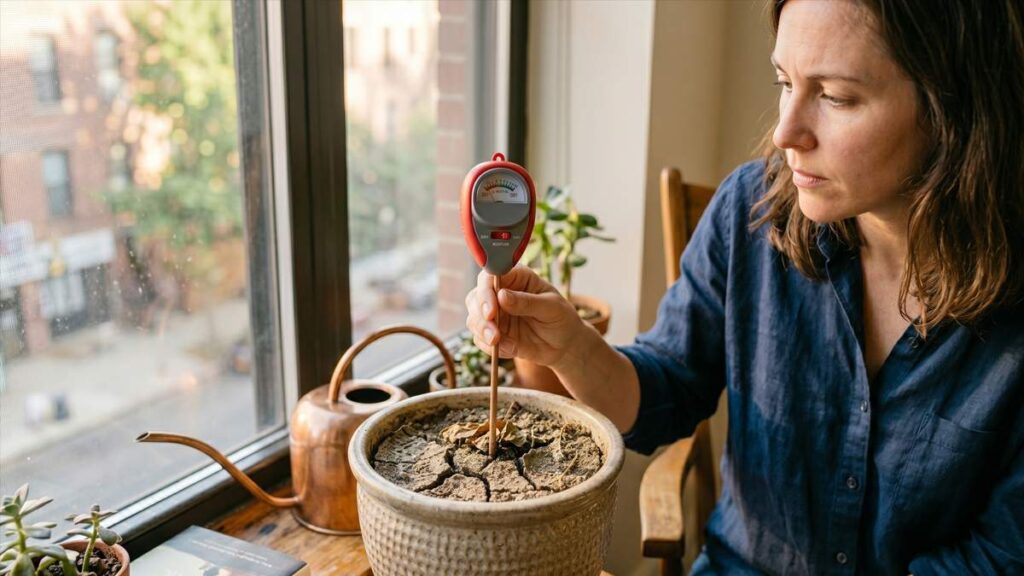
To get the most out of the best moisture meter for indoor plants, follow these steps:
- Wipe the probe: Always clean the metal probe with a cloth before inserting it to remove any residual mineral buildup.
- Insert at root depth: Gently push the probe down into the soil, about halfway between the plant stem and the edge of the pot. Aim to get the tip down to where the actual roots sit.
- Take multiple readings: Don’t just test one spot. Insert it in two or three places around the pot to ensure there aren’t hidden dry pockets.
- Remove immediately: Never leave a moisture meter sitting in a pot of soil permanently, as this will corrode the sensor probe.
Different Plants, Different Rhythms
One of the biggest mistakes beginners make is trying to find a universal answer to how often to water indoor plants. There is no such thing as “every Tuesday watering.” A fixed calendar schedule is a fast track to root rot.
Different plant varieties have completely different cellular structures and evolutionary histories:
1. Succulents and Cacti
These plants evolved in arid deserts. They store water in their thick, fleshy leaves or stems. They need their soil to dry out completely from top to bottom before being watered again.
2. Tropical Foliage (Monsteras, Philodendrons, Calatheas)
Hailing from rainforest understories, these plants prefer consistent, light moisture. You should generally water them when the top 2 inches of soil feel completely dry, but before the root ball dries out.
3. Drought-Tolerant Hardies (Snake Plants, ZZ Plants)
These incredible plants can survive weeks, sometimes even a month or two, without a drop of water. Treat them more like succulents; let them dry out entirely.
Common Indoor Plant Watering Mistakes to Avoid
Even with the best intentions, it is easy to fall into bad habits. Keep these essential indoor plant watering tips in mind:
- Sipping water: Giving your plant a tiny splash of water every couple of days is harmful. It only wets the top layer of soil, leaving the deep roots to wither. Instead, water thoroughly until it runs out of the bottom drainage holes, then let the soil dry out.
- Ignoring the saucer: If your pot sits in a saucer, never let water pool in it for more than 15 minutes. Standing water blocks oxygen and triggers root rot.
- Using cold water: Icy tap water shocks tropical plant roots. Always use room-temperature water.
- Blaming the calendar: Seasonal shifts alter water needs. In the spring and summer (growing season), plants drink rapidly. In winter, plants go semi-dormant and need significantly less water.
Also, learn Best Soil Moisture Measuring Device for Plants: A Green Thumb’s Tale.
Best Watering Tools for Monitoring Moisture
Equipping yourself with a few simple tools will elevate your plant care routine instantly:
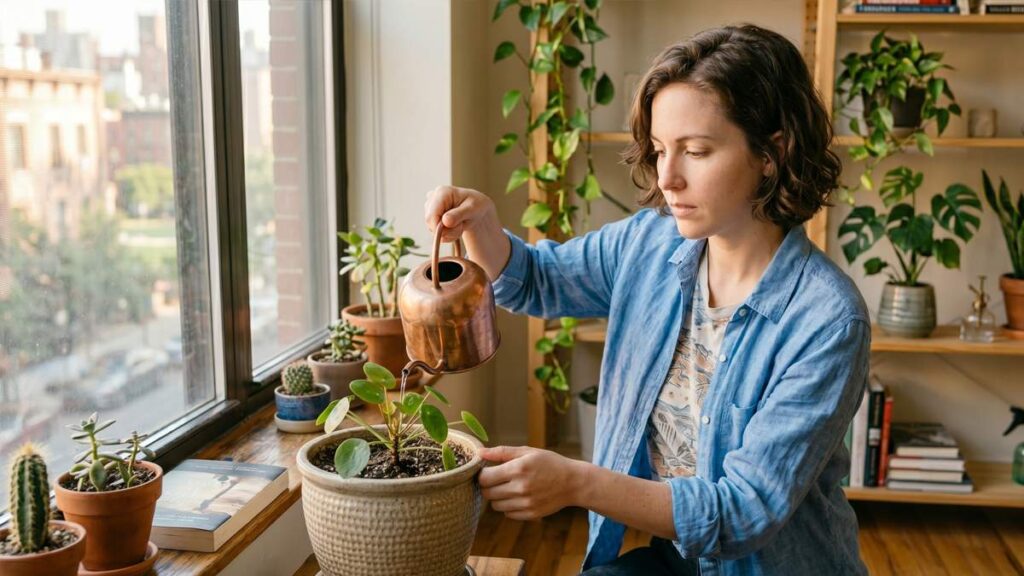
- A Long-Spout Watering Can: A narrow spout allows you to target the soil directly without wetting the foliage, which can cause fungal diseases.
- A Mechanical Moisture Meter: A budget-friendly, instant-read tool that takes the guesswork out of the equation.
- A Wooden Chopstick or Bamboo Skewer: The ultimate eco-friendly, zero-cost moisture tester.
Frequently Asked Questions (FAQs)
1. How do I know if my indoor plant needs water?
The most reliable ways are checking if the top 2 inches of soil are completely dry using your finger, feeling if the pot feels exceptionally light when lifted, or checking for physical cues like slight wilting or dull, matte leaves.
2. Is it better to underwater or overwater indoor plants?
It is always safer to underwater. A dehydrated plant can easily recover once given a deep drink because its roots are still intact. An overwatered plant suffers from root rot, which destroys the root system entirely and is much harder to fix.
3. What does an overwatered plant look like?
An overwatered plant typically develops limp, soft, yellowing leaves (often starting at the base). The soil may smell sour or musty, and you might notice small fungus gnats flying around the damp surface.
4. How often should you water indoor plants?
There is no set timeline, as factors like sunlight, humidity, and pot size change how fast soil dries. Instead of a schedule, check your soil every few days and only water when the specific dryness threshold for that plant variety is met.
5. Can I use a moisture meter for all types of houseplants?
Yes, moisture meters work beautifully for almost all houseplants. However, they can give inaccurate readings in highly chunky soil mixes (like pure orchid bark) because the air pockets prevent the probe from making solid contact with the medium.
6. Why are my plant leaves turning brown and crispy at the tips?
This is typically a classic sign of underwatering or low humidity. When the plant doesn’t get enough water, it cannot push moisture all the way to its furthest extremities, causing the tips to dry out and turn brown.
Related Post:
- Indoor Garden Ideas for Small Spaces
- Best Indoor Plant Fertilizer Boost Growth and Vibrance Effortlessly
- How to Get Rid of Spider Mites on Indoor Plants Without Chemicals
- Swiss Cheese Plant Care: Mastering the Art of Indoor Gardening
- The Best Indoor Herb Garden with Grow Light: My Not-So-Secret Green Thumb Journey
Conclusion: Trust Your Instincts and Listen to Your Plants
Learning how to know when indoor plants need water takes a little time and observation, but it quickly becomes second nature. Stop relying on rigid calendar schedules and start paying attention to the weight of your pots, the texture of the soil, and the posture of the leaves.
Next time you grab your watering can, stop for a brief ten seconds. Do the finger test or insert your moisture meter. By taking a moment to listen to what your green friends are telling you, you’ll build a flourishing, vibrant, and resilient indoor garden that brings joy to your home for years to come. Happy planting!